Extreme summer heat can push your air conditioner to the breaking point. As temperatures in Olathe rise, many families notice increased energy bills, hot spots throughout the home and cooling systems that seem to run all day without keeping up.
People often think the air conditioning is the one thing that determines how comfortable your home feels. The fact is, your home’s air circulation, insulation and shade all play a significant role in cooling performance.
This guide explains three effective strategies that can improve comfort and cooling efficiency: increasing airflow in your home, making sure your home has adequate insulation and creating shade to reduce heat from the sun. When you follow these summer AC tips from the pros at KC HVAC, you’ll keep your house cool in even the hottest weather.
Start with Airflow: Help Your AC Work Smarter
Air conditioners cool the air and move it through ductwork to every room in your home. For that conditioned air to keep your home comfortable, it must be able to move freely throughout the house. Whenever airflow is blocked, some rooms may feel warmer than others.
Many homeowners blame their air conditioning system for an uncomfortably hot home. However, the AC is often working just fine—the real problem is poor airflow. A dirty air filter, blocked vents and other HVAC issues can all restrict airflow.
Home Airflow Optimization Strategies
Taking these easy steps to improve airflow in your home can improve comfort, minimize strain on your AC and reduce energy costs.
- Change dirty air filters. Routine AC air filter replacement helps your HVAC system circulate air more efficiently while helping improve indoor air quality.
- Check that supply and return vents are unblocked. Furniture, rugs and curtains can lead to blocked air vents that keep cooled air from circulating throughout your home.
- Open up doors in unused rooms. This helps air to move more evenly between rooms.
- Move furniture covering registers.Making sure registers are free of obstructions allows conditioned air to circulate properly.
- Book preventiveAC maintenance services. By doing a professional HVAC tune-up, a technician can inspect and clean debris-covered blower components that may limit your system’s ability to circulate air.
Insulation Plays a Bigger Role Than Many Homeowners Think
Insulation serves as a barrier against the warm air outside your home. While your AC removes heat from inside your home, insulation helps stop heat from moving indoors. High-quality insulation increases comfort, lowers cooling run times and can help increase the life of your HVAC system.
The attic is one of the primary sources of unwanted heat gain during heatwaves. Proper attic insulation and cooling go hand in hand because attic insulation reduces heat transfer through the roof. Proper weatherstripping and sealing around doors and windows also help keep hot outdoor air from getting inside.
Whenever insulation levels are too low or air leaks let warm air into your home, your AC has to work harder. As a result, many homeowners ask, “Why is my house hot with the AC running?” Frequently, the real problem is inadequate insulation, and the AC is not the problem.
Signs of Low Home Insulation Levels
- Upper floor rooms are always hot
- Uneventemperatures
- High utilitybills
- An air conditioner that rarely shuts off
Use Shade to Help Lower Cooling Costs
Sunlight coming through windows and heating your roof and exterior walls boosts indoor temperatures, forcing your air conditioner to work harder.
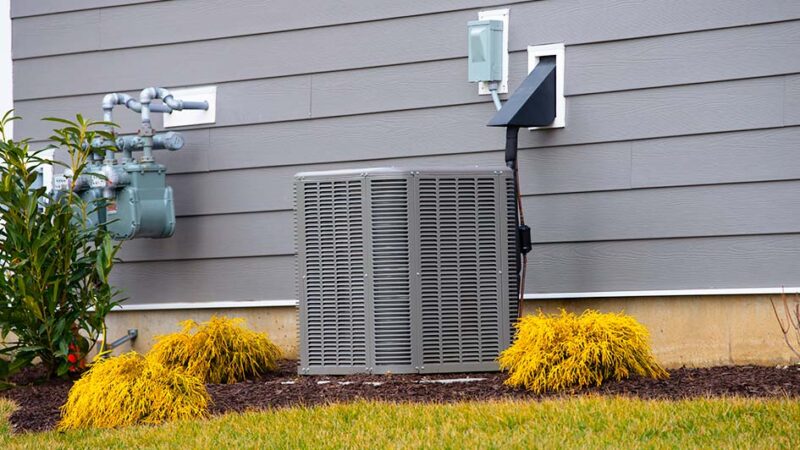
Direct sunlight can also reduce the efficiency of your outdoor cooling unit by making it harder to release heat efficiently. Using shade around your property can minimize solar heat gain, improve comfort and decrease summer energy bills. Using trees or other landscaping to shade your air conditioner’s outdoor unit can also help—but never restrict airflow around the condenser. Don’t install fences, enclosures or dense landscaping that block air movement.
5 Summer AC Tips for Keeping Your Home Cooler with Shade
- Add trees and landscaping strategically. Position trees to shade your roof, walls, windows and outdoor cooling equipment. When shading your outdoor AC unit, keep at least 2–3 feet of clearance on all sides and 5 feet above the unit to ensure it receives enough airflow.
- Add window coverings. Light-colored curtains, cellular shades and thermal drapes help reduce heat gain from sun streaming through windows.
- Add solar screens in your home. Solar screens, which are specially designed mesh curtains, placed on sun-facing windows help reduce the sun’s heat while still letting in natural light.
- Incorporate exterior shading. Add landscaping and design features like awnings, pergolas, shade sails or exterior shutters to keep direct sunlight off windows so it can’t heat up your home.
- Close your blinds during the afternoon. Leave blinds or shades closed on west- and south-facing windows during the hottest part of the day to reduce indoor temperatures and lighten the load on your AC.
Additional Heat-Wave Survival Tips
Airflow, insulation and shade can make a big difference, but these AC efficiency tips can help improve comfort during intense summer heat.
- Change ceiling fan direction. Run ceiling fans counterclockwise to produce a cooling breeze.
- Limit heat-generating appliances during the hottest part of the day. Use ovens, dryers and dishwashers in the morning or evening to limit indoor heat.
- Set thermostat settings. Don’t make frequent temperature changes that force your AC to work harder.
- Schedule preventative maintenance. Routine service helps your system perform efficiently before peak cooling season.
- Pay attention to unusual system performance. Address strange noises, weak airflow or inconsistent cooling before they become larger repairs.
Know When It’s Time to Turn to an HVAC Professional
Basic AC maintenance and efficiency-focused cooling strategies can help, but some problems require professional attention. When warm air is coming from your vents, airflow feels weak, your air conditioner seems to run constantly, energy bills spike, rooms cool unevenly or your system turns on and off repeatedly, it’s a good idea to schedule an expert evaluation.
At KC HVAC, our cooling specialists evaluate airflow, duct performance, insulation-related comfort concerns and overall system health to identify the real cause to help your HVAC system run at its best throughout the summer.
Enjoy Reliable Cooling All Summer Long
Keeping your home cool during a heat wave takes more than just your air conditioner. Proper airflow, adequate insulation and well-planned shade work together to enhance comfort, boost efficiency and reduce cooling costs. Along with regular summer HVAC maintenance, these strategies can help your system perform at its best when you need it most.
has the training and experience to keep you comfortable no matter how hot it gets outside. Whether you need AC maintenance, a cooling system inspection, an airflow evaluation or a complete summer tune-up, we’ll help boost efficiency and comfort during hot summers. Schedule cooling services online or call today to get started.
